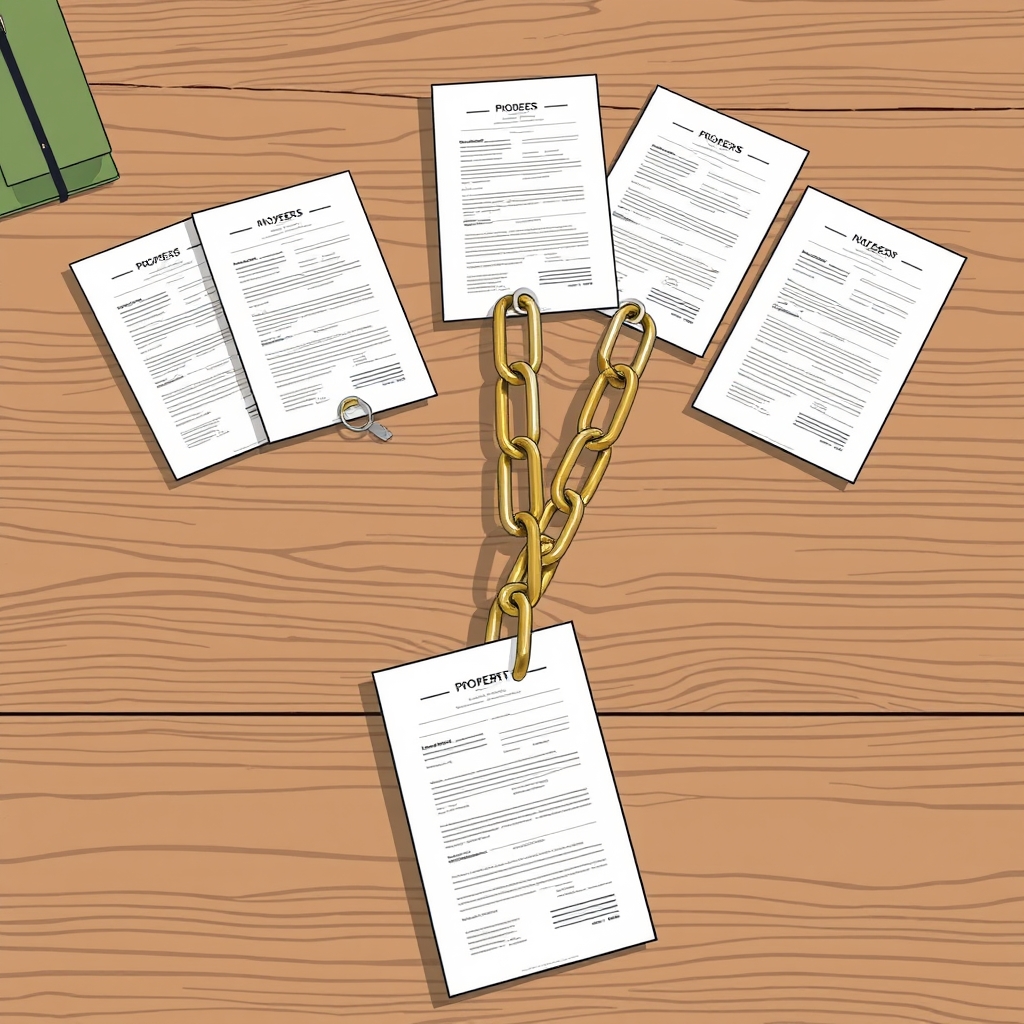
Most real estate investors hit the same wall: they find the deal of the year, but the down payment is locked up in another property they already own. Banks shrug. The deal dies. But sophisticated investors don't lose those deals — they cross-collateralize. It's one of the most powerful scaling tools in private lending, and it's effectively exclusive to hard money lenders willing to think creatively about collateral.
What Cross-Collateralization Actually Means
Cross-collateralization is the practice of using equity in one property — typically one the borrower already owns — as additional security for a loan on a different property. Instead of demanding a cash down payment, the lender takes a lien position on a second (or third) asset to bring the combined collateral package to a comfortable loan-to-value ratio.
In practical terms, a borrower with substantial equity in an existing rental, flip, or commercial building can pledge that equity to acquire a new property — often with little or no cash out of pocket. The borrower keeps using their own balance sheet to grow, rather than parking liquidity in dead down payments.
Why Banks Don't Offer This
Cross-collateralization is technically legal for banks, but in practice it almost never happens. Federally insured institutions are governed by strict regulatory frameworks — Dodd-Frank, FDIC capital adequacy rules, internal loan-to-one-borrower limits, and rigid portfolio classification standards — that make this kind of structure a compliance headache.
A bank underwriter has to slot every loan into a specific product category: owner-occupied residential, investment 1-4 unit, commercial, construction. Each category has its own LTV cap, its own appraisal requirements, and its own secondary-market sale criteria. A loan secured by two different properties of different classes doesn't fit any standard product, can't be sold to Fannie or Freddie, and won't pass the bank's risk committee. The deal dies before it reaches the underwriter's desk.
Hard money lenders operate outside that framework. We hold our paper. We underwrite the asset and the borrower, not a checklist. That structural freedom is exactly why creative collateral structures live almost exclusively in the private lending world.
How Hard Money Lenders Use It to Scale Borrowers
For a serious investor, cross-collateralization is rocket fuel. It lets you:
- Move on deals immediately without waiting weeks to liquidate other assets or pull a HELOC.
- Keep cash reserves intact for renovation budgets, carrying costs, and unexpected expenses.
- Bridge between projects by using equity from a stabilized property to fund the acquisition of the next one.
- Scale portfolio velocity by recycling the same equity across multiple deals over time.
- Avoid the down-payment ceiling that limits even well-capitalized investors to one or two deals per year.
At Noble Tree Capital, we routinely structure loans where the borrower brings no cash to closing — because their existing equity is doing the work. That's not aggressive lending; it's intelligent collateral structuring.
Worked Example: $0 Down on a $500K Acquisition
Imagine an investor wants to acquire a $500,000 rental property. A conventional lender would require roughly $125,000 down (25% on an investment property), plus closing costs and reserves — call it $140,000 cash out the door.
That same investor owns a stabilized fourplex worth $700,000 with an existing loan balance of $280,000 — meaning $420,000 of trapped equity sitting idle.
Under a cross-collateralized hard money structure, the lender writes a single loan of $500,000 secured by both properties. The combined collateral value is $1,200,000, and the combined debt is $780,000 ($500K new + $280K existing) — a blended LTV of 65%. The lender is well-protected. The borrower closes on the new property with zero cash down and keeps every dollar of reserves intact for renovations or the next opportunity.
No bank in America will write that loan. A private lender like Noble Tree Capital can — and frequently does.
Risks and How Noble Tree Capital Structures Them Safely
Cross-collateralization is powerful, but it isn't risk-free. The borrower's downside is real: if the new project fails and the loan defaults, both properties are exposed. That's exactly why structure matters.
Noble Tree Capital approaches every cross-collateralized deal with a few non-negotiables:
- Conservative blended LTV. We size the combined collateral package to maintain meaningful equity cushion across both assets — typically 65-70% combined LTV, never stretching just because the equity is there.
- Clear release provisions. Our notes specify exactly how and when the secondary collateral can be released — usually upon refinance, sale, or hitting a defined principal paydown threshold. Borrowers are never trapped indefinitely.
- Realistic exit underwriting. We underwrite the borrower's exit strategy on the new property as rigorously as the acquisition itself. Cross-collateralization isn't a way to paper over a weak deal; it's a way to accelerate a strong one.
- Transparent terms. Every borrower understands exactly which properties secure the loan, in what priority, and what triggers a release.
Done right, cross-collateralization is one of several scaling tools that hard money offers and banks structurally cannot. It's how serious investors compress years of portfolio growth into months — without going to the well for fresh equity on every deal. Noble Tree Capital has the flexibility, the balance-sheet authority, and the underwriting experience to structure these loans creatively and safely. If you've got equity sitting idle and a deal you can't afford to lose, that's exactly the conversation we want to have.